Hardware Innovations Powering Real-Time Translation in Wireless Earbuds
Written by Ulrich Koch · Nov 13, 2026
Hardware Innovations Powering Real-Time Translation in Wireless Earbuds
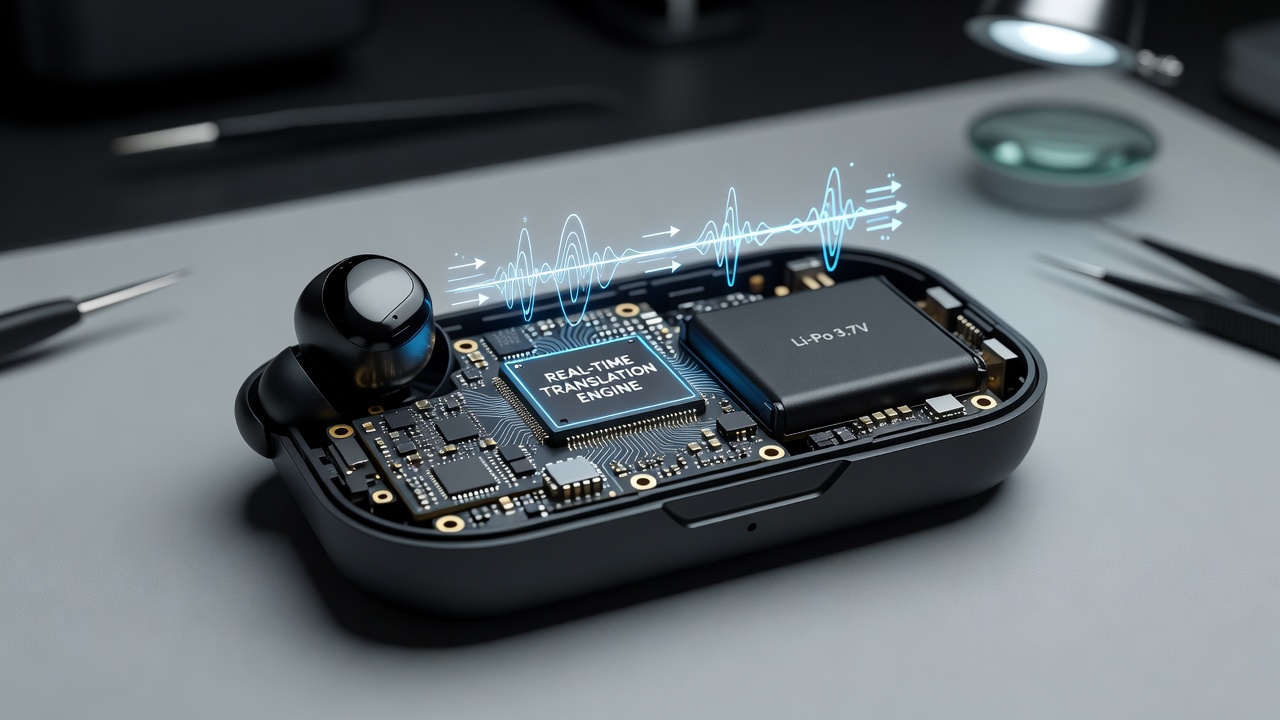
Wireless earbuds now handle live language translation through specialized hardware components that process audio signals on the device itself rather than relying on distant servers, and this approach reduces latency to under 200 milliseconds in many current models. Engineers have integrated neural processing units directly into the earbud chipsets, allowing machine learning models for speech recognition and synthesis to run locally while maintaining battery life across extended use periods.
Processor Architecture Developments
Manufacturers shifted from general-purpose microcontrollers to application-specific integrated circuits that incorporate dedicated tensor cores and digital signal processors optimized for audio workloads. These changes enable simultaneous handling of noise cancellation, voice activity detection, and neural network inference for translation tasks within the same silicon package. Data from semiconductor industry analyses indicate that such hybrid chips appeared in flagship products starting around 2023, with performance gains accelerating through iterative design cycles.
One notable example involves systems-on-chip that combine ARM-based CPU cores with custom AI accelerators, where the accelerators execute transformer-based models for language processing at clock speeds that balance speed against thermal constraints inside the small earbud housing. Researchers at technical institutions have documented how these architectures cut power draw by up to 40 percent compared with earlier software-only implementations running on smartphones.
Audio Input and Output Enhancements
Microphone arrays in modern earbuds feature multiple MEMS sensors arranged to capture directional audio, which feeds beamforming algorithms that isolate the wearer's voice from ambient noise before translation begins. Hardware filters and analog-to-digital converters operate at higher sampling rates, delivering cleaner input data to the on-device processors. This hardware refinement supports accurate recognition across accents and background environments without offloading raw audio streams.
Speaker drivers have also evolved, with newer balanced armature or dynamic designs delivering clearer synthesized speech output at lower power levels. Observers note that these output components pair with low-latency Bluetooth codecs such as LC3, which transmit translated audio back to the earbuds while preserving synchronization between incoming speech and rendered translation.
Power and Thermal Management Systems
Battery technology and power management integrated circuits play central roles in sustaining real-time translation sessions, as continuous neural inference demands steady current without rapid depletion. Advanced PMICs now include multiple voltage rails that supply high-performance cores only during active translation bursts, then scale down to idle modes. Studies from electronics research groups show that such dynamic scaling extends operational time by several hours compared with constant high-power states.
Thermal considerations remain critical because earbuds sit close to skin, and excess heat from sustained AI computations could affect comfort. Designers addressed this through heat-spreading materials and firmware that throttles non-essential tasks, ensuring the hardware maintains performance thresholds without external cooling solutions.
Integration with Wireless Standards and Edge Computing
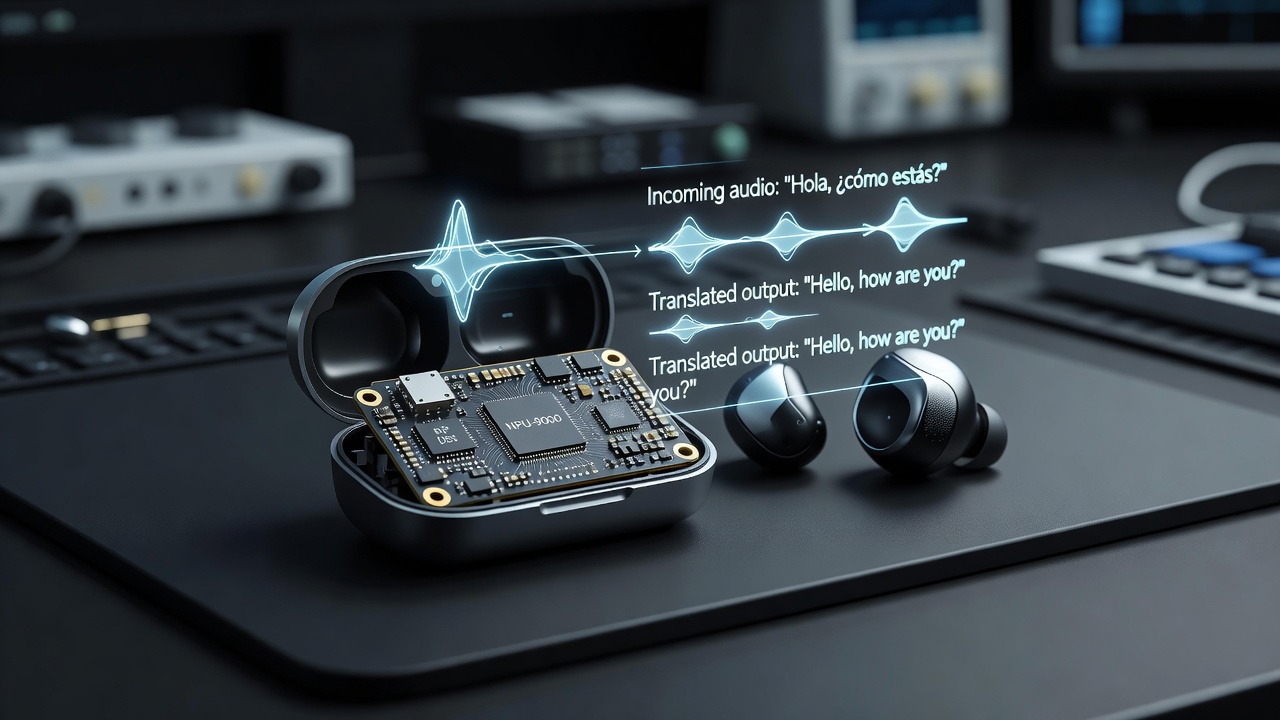
Bluetooth Low Energy advancements, including improved connection intervals and multi-stream audio support, allow earbuds to maintain stable links with companion devices while exchanging translation metadata. Hardware support for these protocols reduces the need for constant smartphone involvement, shifting more computation to the earbuds themselves. Industry reports from organizations such as the Bluetooth Special Interest Group highlight how recent specification updates facilitate the low-latency requirements of conversational translation.
Some implementations incorporate limited edge-cloud handoff, where hardware accelerators decide locally whether a phrase requires deeper model layers available only on remote servers. According to technical documentation from North American semiconductor firms, this hybrid model keeps most traffic on-device while preserving accuracy for complex linguistic structures.
Developments Anticipated by November 2026
Projections from hardware roadmaps suggest further miniaturization of neural engines and adoption of newer process nodes below 5 nanometers, which would increase on-chip model capacity and speed without raising power budgets. Canadian research consortia have published findings on emerging sensor fusion techniques that combine audio with motion data to improve context awareness during translation, potentially reducing errors in dynamic environments.
European Union-funded projects continue to explore standardized interfaces for translation hardware, aiming to improve interoperability across brands while addressing data privacy through on-device processing mandates. These efforts align with broader trends toward localized AI execution that hardware vendors have already begun implementing.
Conclusion
The convergence of specialized processors, refined audio hardware, and efficient power systems has established the foundation for reliable real-time translation directly within wireless earbuds, and ongoing refinements in chip design and wireless protocols continue to expand these capabilities. Figures from supply chain analyses reveal steady growth in adoption rates as component costs decline and performance metrics improve across successive product generations.